Looking for the best attractions in Kuala Lumpur? Then you’ll definitely be visiting the Batu Caves temple complex located on the edge of KL.
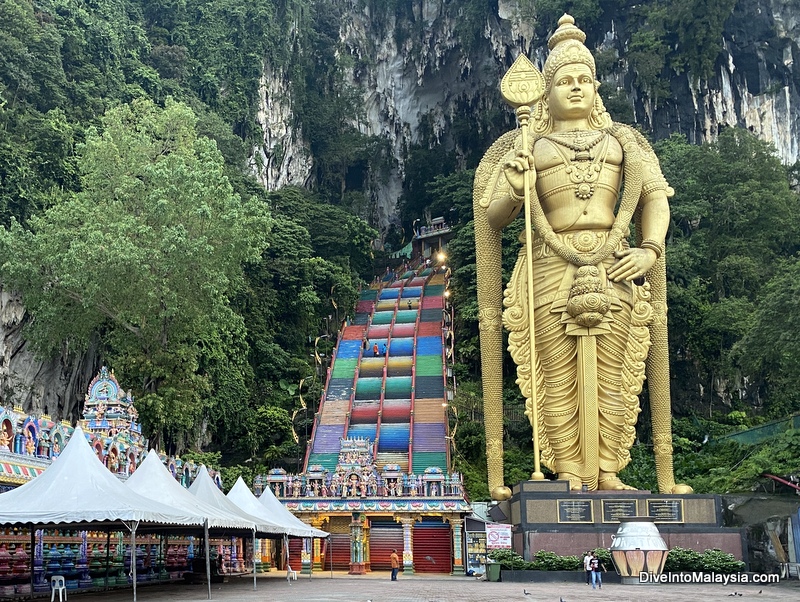
One of the most visited attractions in Malaysia, you may have already seen photos of the colourful Batu Caves stairs, the big Lord Murugan statue that guards the entrance, the colourful Batu Caves temples and the caves at the top. It makes for quite a sight and it’s only better when you see it in person.
If you’re wondering if it’s worth visiting Batu Caves, it definitely is. There is a lot to see and explore here and it’s a beautiful place for many reasons.
Below, I describe everything you need and want to know before your Batu Caves visit from what exactly you can see there, what it’s like inside Batu Caves, the Batu Caves history, the answer to where is Batu Caves, the Batu Caves temple opening hours, the entrance fee to Batu Caves, what you should wear and much more.
So keep reading! As you’ll soon know everything you need to about this great attraction in the full Batu Caves review with plenty of Batu Caves photos.
Travelling to Malaysia? Click here to download your free Malaysia Trip Planning checklist. We’ll help you get ready for your trip!
Have any questions? Join our Malaysia Travel Planning Facebook group here now! It’s the perfect place to ask any questions and to be inspired.
Contents
What Is Batu Caves?
Batu Caves is a limestone cave complex and important Hindu pilgrimage site on the outskirts of Kuala Lumpur. Its main attraction is Temple Cave, reached by climbing the famous 272 colourful steps. There are also smaller temples and other attractions around the base of the hill.
History Of Batu Caves Malaysia
Batu Caves is situated on a mogote which is a type of steep-sided hill made out of limestone, marble or dolomite. This limestone formation is thought to be around 400 million years old and is quite a sight on the edges of the massive Kuala Lumpur.
So if you want to know, when was Batu Caves built? The answer is they have existed for a long time. But its relatively recent history is when things become more interesting.
The caves found here were first used by humans as shelter by the indigenous population. Then around 1860, Chinese settlers began taking the guano found here (bat poo) for fertilising their gardens.
In the early 1890s, Indian Tamil trader K. Thamboosamy Pillai established a shrine dedicated to Lord Murugan inside Temple Cave. The annual Thaipusam celebration began here in 1892, helping establish Batu Caves as an important Hindu pilgrimage site.
Batu Caves temple history took a big step forward when wooden steps up to Temple Cave were built in 1920. In 1940, two sets of concrete steps were completed.
Another major change came in 2018, when the stairs were painted in the bright colours they’re famous for today.
Today, Batu caves is one of the most popular Hindu temples outside India. It receives many visitors and is one of the most popular attractions in Malaysia.
Where Are The Batu Caves In Malaysia?
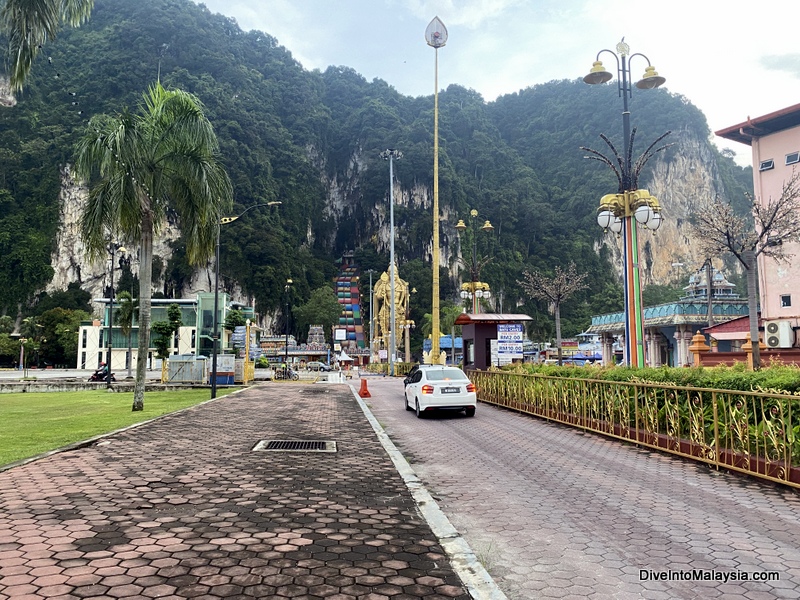
The Batu Caves location is on the edge of Kuala Lumpur, about 13 kilometres from the centre.
The Batu Caves temple address is simply Batu Caves, 68100 Batu Caves, Selangor, Malaysia. You can see the map below for where to find it as well as instructions.
Batu Caves Map
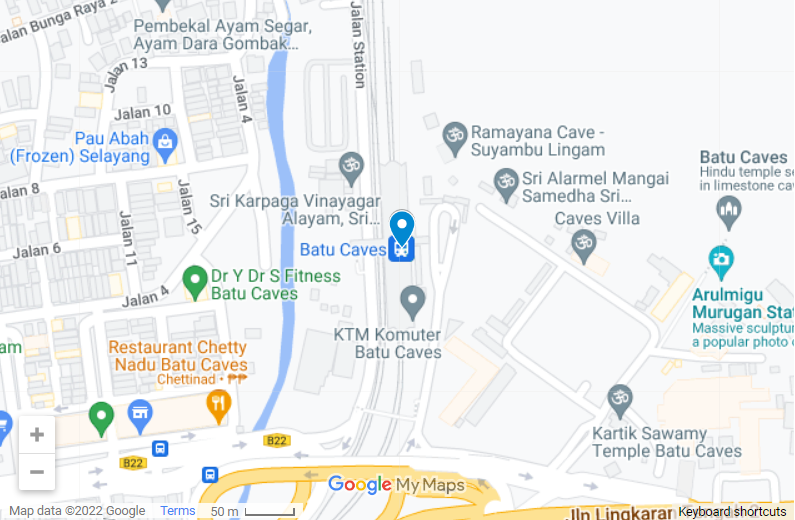
How To Get To Batu Caves
It is simple to get to Batu Caves from KL. If you aren’t in KL yet, make your way to the capital and then you can follow our instructions from here.
You basically have two choices. Either take a taxi or get the train.
Taxis are the simple option and cost from RM20 on the Grab app depending on the time of day and how busy the taxi service is. It takes around 20-55 minutes depending on traffic.
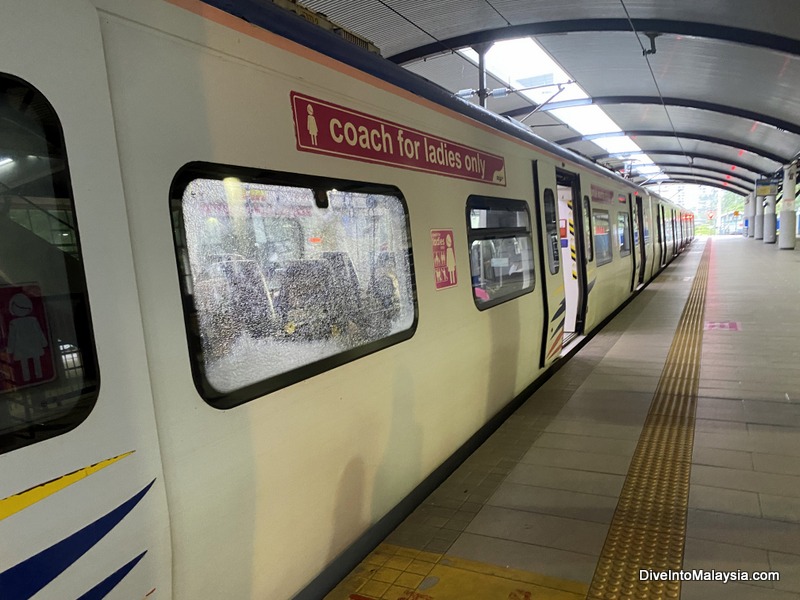
The other option is the KTM Komuter train. This is also straight forward.
Batu Caves is at the end of the line and you can easily catch this from KL Sentral or Kuala Lumpur station. This takes about 35 minutes and is clean and comfortable.
Read our full guide to how to get to Batu Caves here.
An even easier option where you’ll also learn more about Batu Caves facts is to take a tour. These are cheap and easy and usually available daily. See more information below on the best Batu Caves tour package options.
Batu Caves Opening Hours
Batu Caves is open daily, although the different caves and attractions have their own opening hours.
The main Temple Cave generally opens from around 6am to 9pm. Ramayana Cave typically opens from around 9am to 6pm, while Cave Villa generally operates from 8:30am to 5:30pm.
These times can change, particularly during religious festivals and special events.
I recommend visiting early in the morning if you want to avoid the biggest crowds and climb the stairs before it gets too hot.
When I visited, the main temple area was already accessible at 5:45am. I took many of the photos in this article between 7:15am and 8am, when there were very few tourists around.
It was a fantastic experience, although I then had to wait for some of the other attractions to open!
Batu Caves Entrance Fee
One of the best things about visiting Batu Caves is that the main attraction is completely free.
You don’t need to purchase a ticket to see the Lord Murugan statue, climb the colourful staircase or enter Temple Cave.
However, some of the smaller attractions charge separate entrance fees.
| Attraction | Entrance fee |
|---|---|
| Main Temple Cave | Free |
| Ramayana Cave | Approximately RM15 |
| Cave Villa | Approximately RM15 for foreign adults |
| Dark Cave | Closed to regular visitors |
Prices for the smaller attractions can change, so check the displayed fees before purchasing your tickets.
You can enjoy the main Batu Caves experience without paying an entrance fee.
How Long Do You Need At Batu Caves?
I’d recommend allowing around 1.5–2 hours for your visit to Batu Caves.
This gives you enough time to admire the Lord Murugan statue, climb the colourful staircase, explore Temple Cave and take plenty of photos without rushing.
If you also want to visit Ramayana Cave, explore the smaller temples or spend time around the other attractions, allow closer to three hours.
Remember to factor in your travel time from central Kuala Lumpur as well.
Things To Do Around Batu Caves
There are several attractions around Batu Caves, including Temple Cave, Ramayana Cave, smaller temples, the colourful staircase and, of course, the enormous Lord Murugan statue.
Lord Murugan Statue Batu Caves
The Lord Murugan Batu Caves statue is the massive gold statue next to the stairs. You cannot miss it.
Its height is a massive 42.7 metres, and it took three years to build. It was actually only added to the site in 2006.
Lord Hanuman Statue Batu Caves
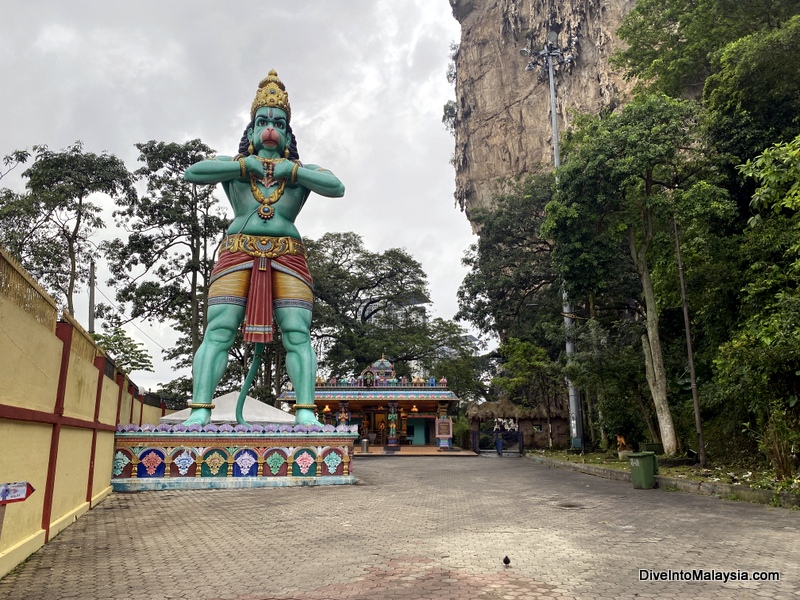
The Lord Hanuman Statue is a green statue that is an impressive 15 metres high about 100 metres to the left of Lord Murugan.
There is also a temple next to this which is worth checking out.
Batu Caves Steps
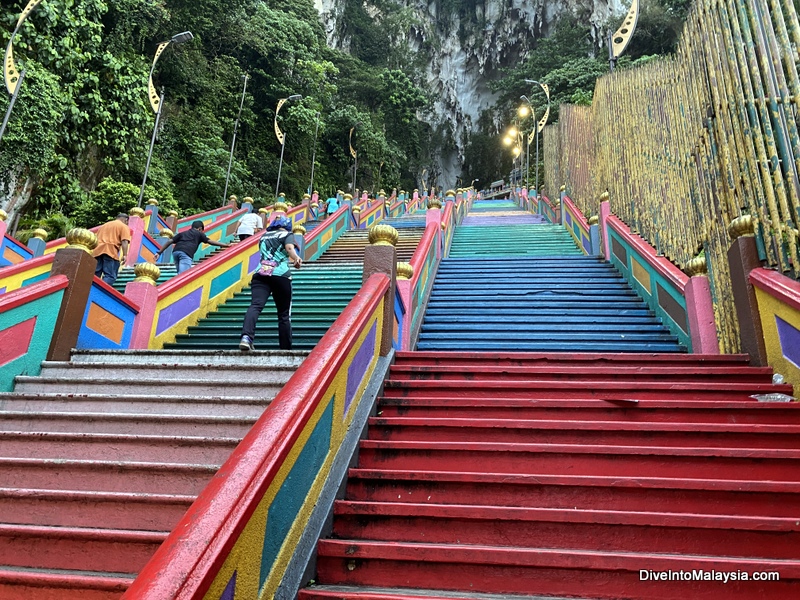
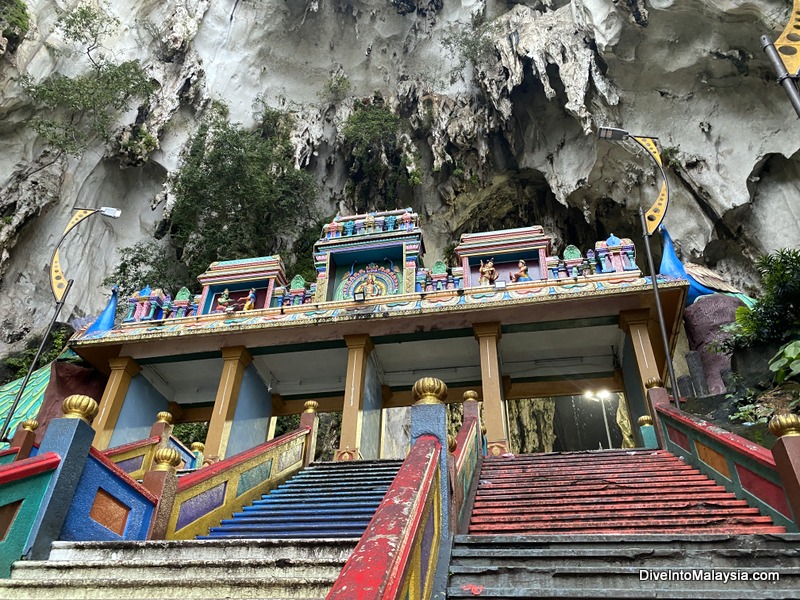
Since the Batu Caves Malaysia steps were painted such amazing colours, they may be the most well known part of Batu Caves – and you’ll definitely want to take a photo and walk to the top to Temple Cave.
If you are wondering how many steps in Batu Caves, there are 272. It’s quite a work out!
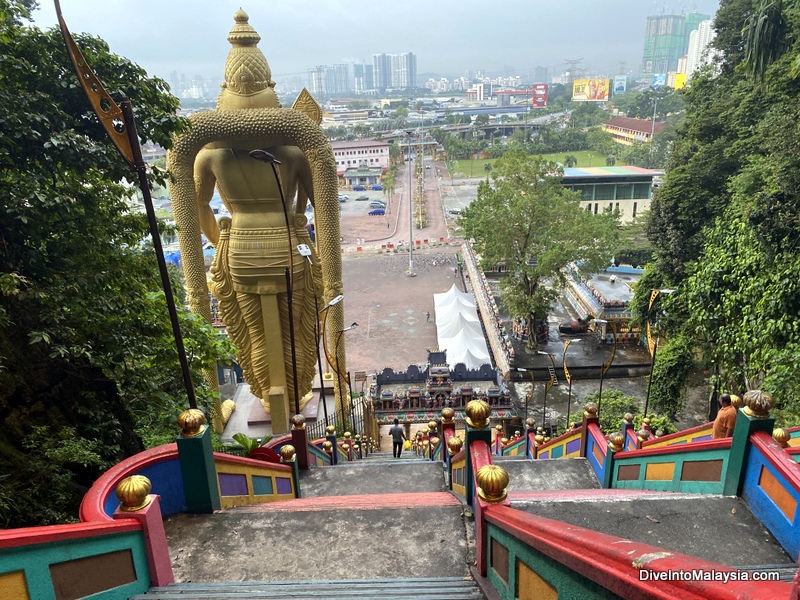
The stairs are in good condition and have handrails, but it’s still quite a climb, particularly in the heat. Take your time and stop for a rest whenever you need to. There is no elevator.
Take a moment to turn around and take in the view as you walk up as well. You can see a fair bit of KL from up here.
Temple Cave
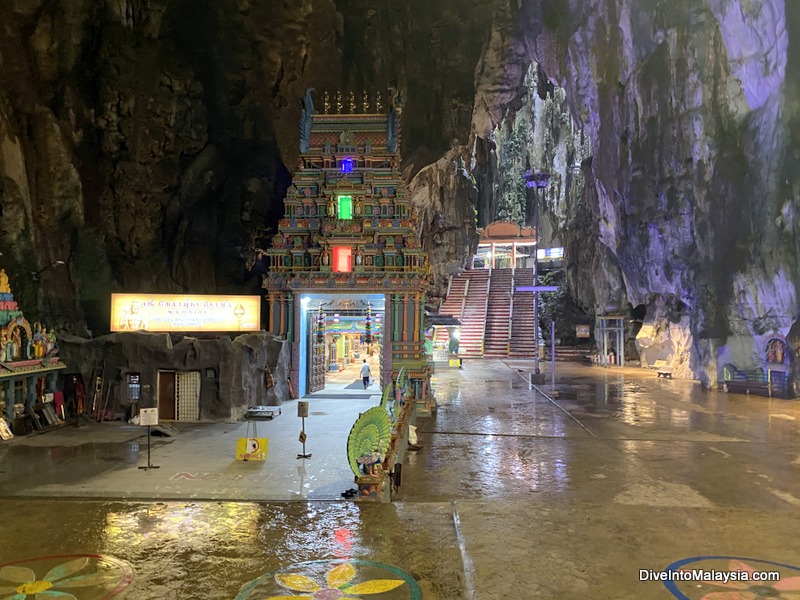
Located at the top of the stairs, Temple Cave is the most famous of the Batu Caves. This is where you can easily explore the Batu Caves inside.
You’ll find a huge cavern with two shrine areas. The Batu Caves height is about 90 metres here.
The first shrine is dedicated to Lord Murugan, while the second is dedicated to Sri Valli and Deivanai, his two consorts.
It definitely feels like a world away from Kuala Lumpur.
Batu Caves Dark Cave
The Dark Cave is a conservation area located partway up the colourful staircase leading to Temple Cave.
It is known for its limestone formations and unusual wildlife, including the rare trapdoor spider found in the cave.
Unfortunately, the Dark Cave is not currently open for regular tourist visits. Guided tours previously operated here, but these have been suspended.
You may still see older travel guides describing the educational and adventure tours, but don’t plan your visit around being able to enter the cave.
Ramayana Cave
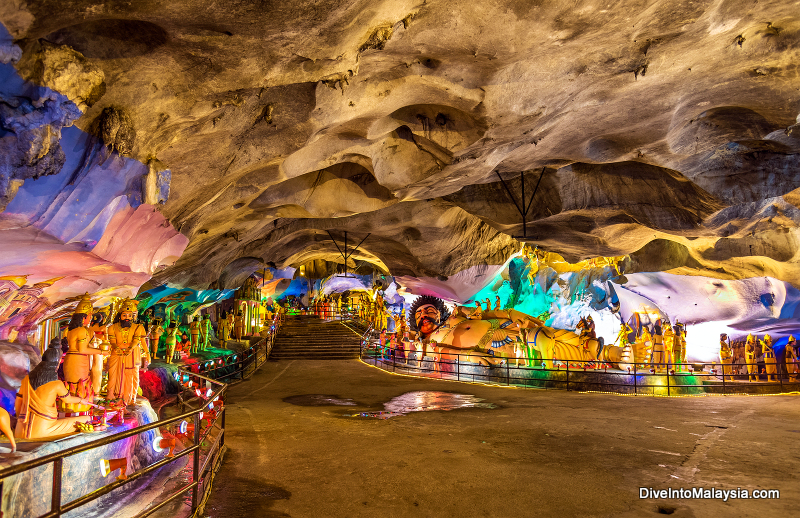
Another of the Batu Caves things to do is the interesting Ramayana Cave. It’s located next to the Hanuman statue about 100 metres to the left of the stairs.
Ramayana Cave is much smaller with lower ceilings than Temple Cave, but it is decorated with many statues, shrines and scenes from the Hindu epic of the same name. More items are being added over time, so even if you have been here before, you may want to check it out again.
This cave has an entry fee which helps keep visitor numbers down making it more enjoyable.
Cave Villa
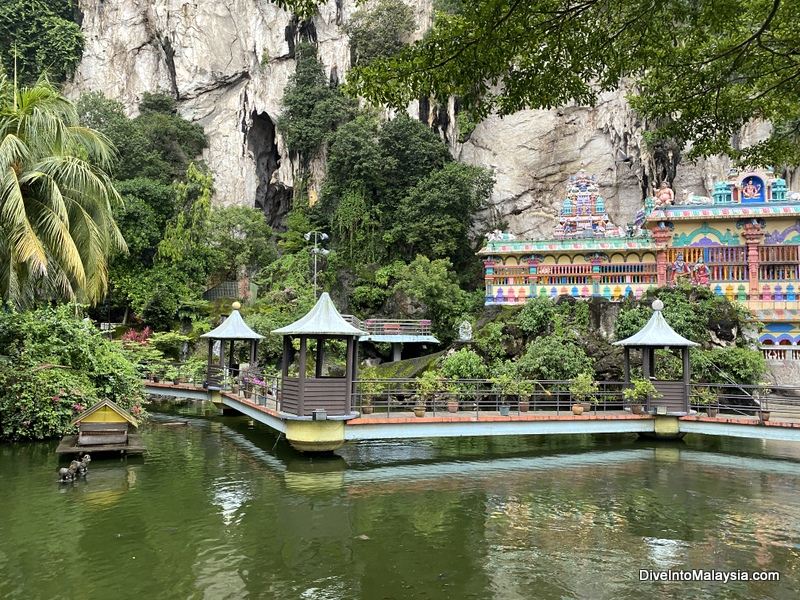
Another attraction at the base of Batu Caves is Cave Villa, located just to the left of the colourful staircase. This can be an option if you can’t climb the 272 stairs to Temple Cave.
This cave has a RM15 entry fee (less for Malaysians) at the time of publishing, and there are a couple of entry points which are clearly signposted. It’s a privately owned attraction that operates separately from the main Batu Caves temple complex.
After paying the entry fee, you get to walk across a bridge over a koi pond as pictured above. There are actually two caves here that also have statues, scenes and shrines.
Unfortunately, there are also some caged animals and reptiles in inhumane conditions, so I recommend you choose to skip this cave rather than pay to support this. I chose to not go inside for this reason.
Other Temples
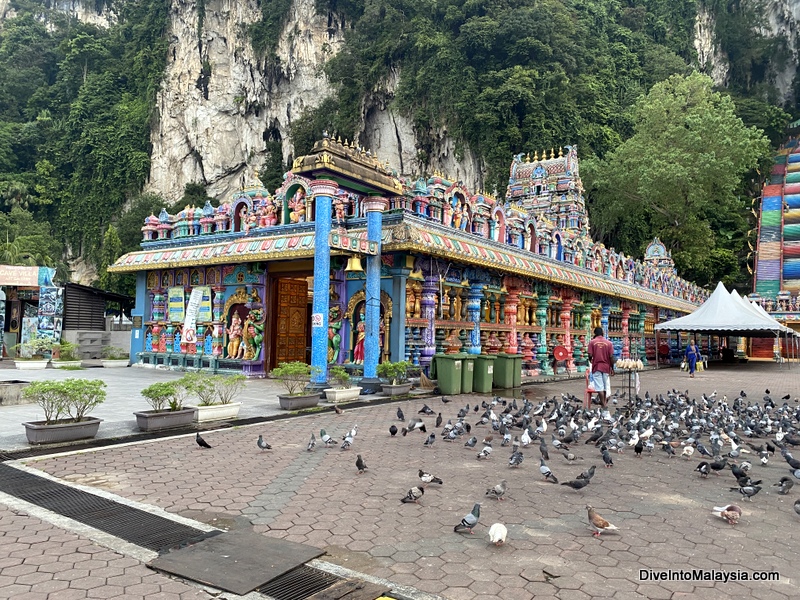
There are multiple temples here in addition to the caves that you can easily visit as you explore the site.
You need to be dressed respectfully to enter (see more about this below), and you should remove your shoes and socks.
These are such peaceful, special places to explore early as people made offerings and chanted. I highly recommend it.
Rock Climbing Batu Caves
Looking for more adventure on your Batu Caves trip? You can rock climb here!
You can do this in a 3-4 hour session with guides and all gear included. You do need a good fitness level but it’s ok for beginner rock climbers.
The climbing takes place at Gua Damai on the same limestone hills as the caves.
Click here for more details and the latest prices.
Thaipusam Festival
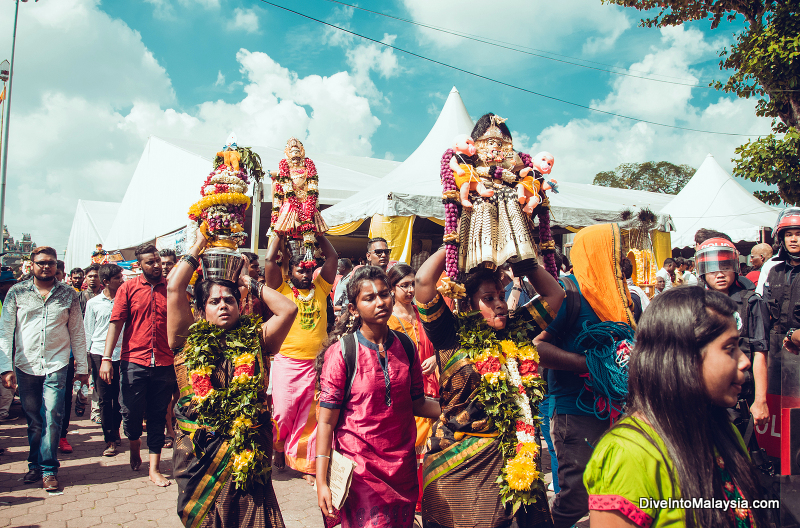
The main Batu Caves festival is for the annual celebration of Thaipusam, a major Hindu event.
The celebrations typically take place over several days in late January or early February, with processions and many, many pilgrims.
It’s quite an experience and worth attending if you are around at the right time.
However, it’s quite a different experience to a trip to Batu Caves at other times so try to experience Batu Caves at a less busy time as well.
Want Help Having An Awesome Food Experience in KL?
Join a Simply Enak (aka delicious) Food Tour!
There are three different options depending on whether you want to concentrate on street food, nightlife or off the beaten track places.
No matter what you pick, you’ll taste a range of fabulous local food and drinks while learning the history and culture of Kuala Lumpur.
There’s no better way to discover this great city.
Make sure you use the coupon code MU30 for RM30 off your tour.
Batu Caves Tours
Here are some popular and affordable tour options…
Private Half Day Tour
In this half day tour, you’ll get return transfers and a private guide to ensure you get the most out of your experience. There are morning or afternoon options for a great price.
Click here for the latest prices and times.
Batu Caves + Other Local Stops
This half day tour includes return transfers, a guide and also two other stops in addition to Batu Caves.
You’ll visit the Royal Selangor Pewter Factory and a Batik Factory showroom as well as learning more about the local area. There are morning and afternoon departures.
Click here for the latest prices and times.
Batu Caves And Genting Highlands Tour
You can also combine a visit to the Batu Caves with a visit to Genting Highlands for a fabulous day tour.
This tour consists of a driver-guide who will share the history of Malaysia while navigating through traffic to your first stop at Batu Caves. After this, he will drive you on to the Awana cable car to take you up to Genting Highlands (cable car included).
You’ll have free time to visit the theme parks and local attractions before taking the cable car back down, meeting with your driver and returning to KL. This Genting Highlands and Batu Caves tour is perfect for anyone who wants to make the most of their time in Malaysia.
Click here for the latest prices and times.
You can find more city tours that include Batu Caves here.
Batu Caves Dress Code
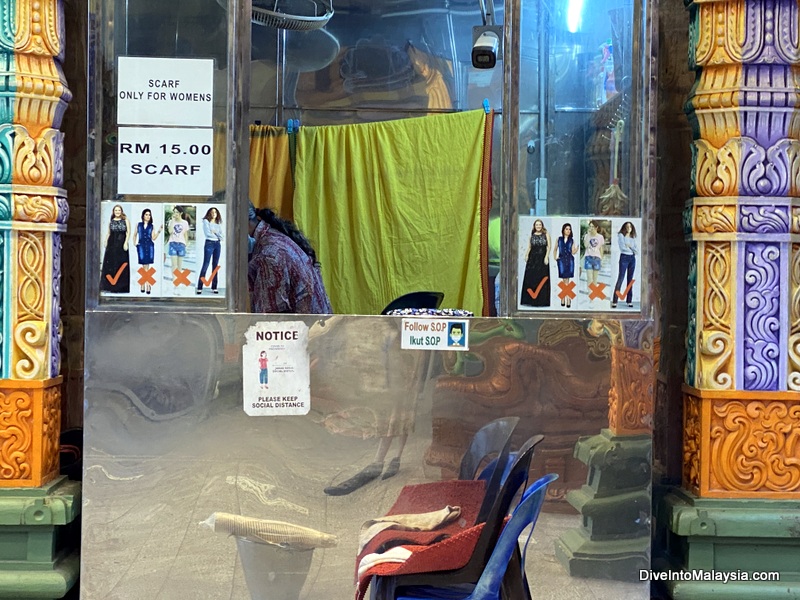
This is a sacred site and you need to dress appropriately. I met someone the day before my most recent visit who told me how she forgot to wear her long dress on her visit and had to buy the RM15 scarves to cover up.
To avoid this, you basically want to cover your knees and shoulders.
The photo above is from the bottom of the stairs up to Temple Cave and gives you a good description of what is ok and not. You can take your own scarf to cover up when going in the temples or buy one here if you are stuck.
You need to take your shoes and socks off to enter temples. This can mean that sandals can be easier. However, I recommend good walking shoes for the stairs so you can feel steady and supported, especially if they are wet.
Batu Caves Weather And When To Visit Batu Caves
Malaysia is in the tropics and basically this means it is hot and humid year round – and it could rain any time you visit Batu Caves. In fact, it didn’t rain during my visit, but there was water falling in Temple Cave so I still got wet!
The heaviest rains can be in March or April, but I would prepare for the fact that rain can happen at any time.
This means it is always smart to take an umbrella, but I would definitely try for a dry day when you visit. It wouldn’t be much fun walking up the Batu Caves staircase in the rain.
The weather Batu Caves experiences is always hot. Visiting first thing in the morning can feel a lot cooler though and I would avoid the heat in the middle of the day if possible.
Batu Caves Monkeys
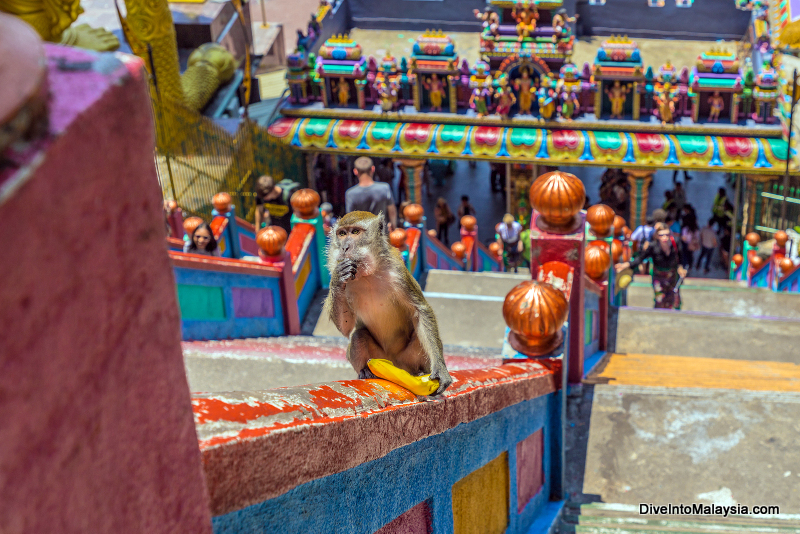
The monkeys at Batu Caves have a mischievous reputation, so watch out for them! 🙂
You may see long-tailed macaques around the entrance, on the staircase and near Temple Cave.
My biggest tip is to keep food hidden and avoid carrying loose plastic bags, as these can attract their attention. Keep your belongings secure, particularly sunglasses, phones and anything dangling from your bag.
Don’t feed, touch or approach the monkeys, even if they appear friendly.
If one grabs something from you, don’t try to fight it or pull the item away. They can bite, so it’s best to keep your distance and avoid provoking them.
Batu Caves Restaurant
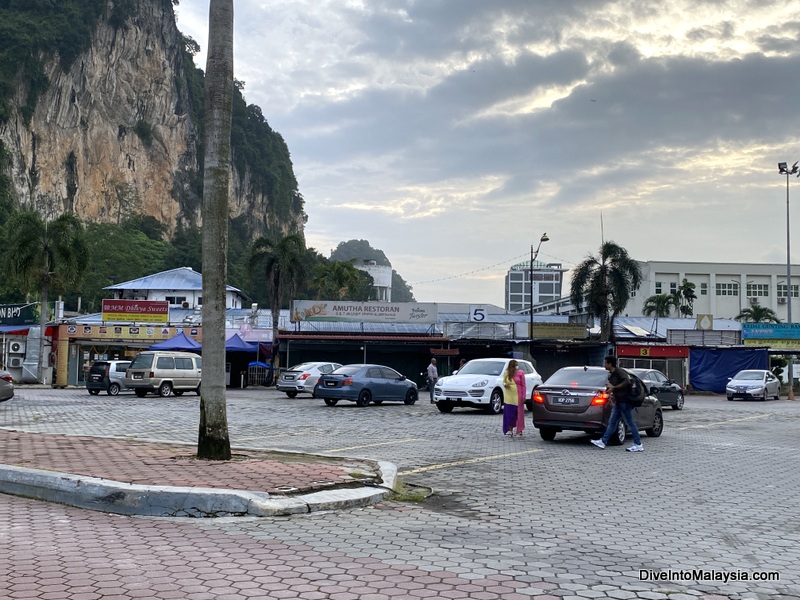
There are eating options right by Batu Caves as pictured above which is to the right of the Batu Caves Murugan statue.
Not much is open early, when this photo was taken, but you’ll never go hungry here.
Final Words
The Batu Caves is an amazing place to visit and it should be high on your list of attractions to see when in KL. It’s easy to get here and combine with other sightseeing so there’s really no reason to miss it.
It was an extra awesome experience visiting early in the morning when everyone around seemed there to worship. The chanting, the cooler air, the amazing surrounds… such an experience!
You can read more about things to do in KL here, find our detailed guide to getting from KL to Batu Caves here or find our full Kuala Lumpur travel guide here. You can also find our list of Kuala Lumpur tours here – many include Batu Caves.
Planning a trip to Malaysia? Have any questions? Join our Malaysia Travel Planning Facebook group here now! It’s the perfect place to ask any questions and to be inspired!