
Want to know all the best places to visit in Kuching? We have you covered! Below, you will find our guide to all the best attractions in Kuching to plan your ultimate trip.
Kuching – the capital city of Sarawak state of Malaysia on the island of Borneo – is the most populous city located along the Sarawak River. Considered a significant gateway for tourists visiting Borneo, there’s a great range of attractions to entice you to stay longer both in the city and in the surrounds. It’s also quite pretty thanks to its riverfront location and is maybe my favourite city in Malaysia. It just offers so much.
Grab your Malaysia Kuching map, and let’s explore this modern city! If it’s your first time in Kuching, I recommend starting at the waterfront. You’ll find a plethora of attractions in the vicinity, including some of the top 10 places to visit in Kuching including the Astana and Fort Margherita.

First-timers to the city find it almost comical to see all the cat-related statues, artworks and carvings that are scattered throughout the city (Kuching literally means cat in Malay!), and the city is even home to the world’s first cat museum. It’s great for a laugh.
Kuching is one of Malaysia’s most culturally diverse cities, with museums exploring its different cultures, religions and indigenous communities.
There are so many interesting places in Kuching town that you need to plan appropriately to make sure you hit the ones that are most important to you. There are a lot of great things to do in Kuching, so it’s usually not possible to see them all in one stay.
No list of where to visit in Kuching would be complete without mentioning the abundant nature on the doorstep of the city. Only an hour outside of Kuching city you have splendid national parks such as the Bako National Park, the best place in Kuching to discover those cheeky proboscis monkeys.

The awesome Gunung Gading National Park is home to the world’s largest flower – the Rafflesia.
It’s hard for us to pinpoint the best place in Kuching as there are simply so many spectacular adventures to be enjoyed. You definitely need more than one day in Kuching!
Below, you will find our full Kuching guide with everything you need to know about the best things to do in Kuching, as well as the best places to stay for your ultimate holiday!
Travelling to Malaysia? Click here to download your free Malaysia Trip Planning checklist. We’ll help you get ready for your trip!
Have any questions? Join our Malaysia Travel Planning Facebook group here now! It’s the perfect place to ask any questions and to be inspired.
Contents
Top 24 Things To Do In Kuching

Here are the best places to go in Kuching. Read through and select the ones that fit your interests and timeframe.
I have loosely ordered this list starting at the Kuching waterfront and working our way out to places to visit in Kuching surrounds. This means that many of the places in the first part of the list can be visited on a walking tour quite easily. You can see many places in a small area in Kuching.
It also means that this list isn’t in order of what you should prioritise visiting.
There are some absolutely fabulous attractions and day trip options from Kuching in the latter part of the list and you should definitely try to visit some (all!) of them.
Take A Walk Along Kuching’s Waterfront

You don’t need to check your Kuching map; tourists are always naturally drawn to the most iconic spot – the Kuching Waterfront!
Stretching approximately 1.5 kilometres along the Sarawak River, this picturesque promenade offers fantastic views across the water, including historical landmarks such as The Astana and Fort Margherita, as well as the striking Sarawak State Legislative Assembly building.
While you are sightseeing here, don’t miss the Darul Hana Bridge. This unusual S-shaped pedestrian bridge crosses the Sarawak River and has viewing platforms where you can admire the surrounding city and riverfront. It’s also one of the best places to photograph the magnificent Floating Mosque. In fact, my photo below of the Floating Mosque was taken from this bridge, as was my photo of The Astana.
Time your visit well, as the sunset views are particularly captivating, with the golden light reflecting off the river and the mosque. The bridge also looks spectacular when illuminated at night.
Another attraction to look out for is the Darul Hana Musical Fountain, near the bridge and the State Legislative Assembly building. When operating, it puts on a colourful display of water, lights and music. Check locally for current showtimes.
There’s a great energy along the waterfront, especially in the evening as the weather cools down and the locals come out. You’ll find food stalls, places to sit and often street performers adding to the atmosphere.
I try to walk along here as much as I can when I’m in Kuching as I just love it.
The Kuching Waterfront is definitely one of the must-visit places in Kuching. The next few attractions on this list can also be visited or viewed while walking along here.
Location: Along the southern bank of the Sarawak River, near Main Bazaar, central Kuching.
View The Amazing Floating Mosque

Located right on the Sarawak River, Kuching’s Floating Mosque is a relatively new addition to the waterfront, having opened in 2019. Officially known as Masjid India Kuching, it’s big enough to accommodate around 1,600 worshippers.
It was built to replace the old Masjid India, which had served Kuching’s Indian Muslim community for more than 180 years.
Inspired by Middle Eastern Islamic architecture, the mosque looks spectacular beside the river, especially at sunset when the golden light accentuates its colours. It’s also worth seeing at night when it’s illuminated.
One of the best places to photograph the mosque is from the Darul Hana Bridge, where you can admire its distinctive golden dome against the riverfront.
Non-Muslims can also visit the mosque outside prayer times, provided they dress appropriately and follow any instructions from mosque staff. This gives you a chance to appreciate its beautiful interior as well as its exterior.
Location: Kuching Waterfront, near India Street and the Darul Hana Bridge.
Check Out The Astana

The Astana, a name derived from the Malay word istana, meaning palace, is one of Kuching’s most recognisable historical landmarks.
This majestic colonial building was constructed in 1870 by Charles Brooke, the second White Rajah of Sarawak, as a wedding gift for his wife, Margaret Alice Lili de Windt.
The Brooke family ruled Sarawak from 1841 until 1946, and The Astana served as a residence for the White Rajahs during much of that period.
Today, The Astana is the official residence of the Governor of Sarawak and is used for important state functions and ceremonies.
Unfortunately, it’s not open to tourists, so you can’t explore the building or its grounds. However, it’s still worth admiring from across the Sarawak River.
I think one of the best places to photograph The Astana is from the Kuching Waterfront or Darul Hana Bridge. You can also get great views from a boat on the river.
Location: Petra Jaya, on the northern bank of the Sarawak River, opposite Kuching Waterfront.
Visit Fort Margherita

There are plenty of interesting historical places to visit in Kuching, but Fort Margherita is perhaps one of the most famous.
This English-style fort was built in 1879 by Charles Brooke, the second White Rajah of Sarawak, to protect Kuching from attacks by pirates travelling along the Sarawak River.
Named after his wife, Ranee Margaret, the fort sits on the northern bank of the river, directly opposite Kuching Waterfront.
You can admire its distinctive white towers and walls from the waterfront, but I highly recommend crossing the river to explore it properly. One of the most enjoyable ways to get there is by taking a traditional wooden sampan across the Sarawak River.
Today, the fort houses the Brooke Gallery, which tells the fascinating story of the Brooke family and their rule over Sarawak.
Inside, you’ll find historical photographs, artefacts, documents and other exhibits that help explain how the Brooke dynasty shaped Sarawak’s history.
It’s a really interesting place to spend an hour, particularly if you’re interested in history. I found it a great way to understand more about the influence the Brooke family had on Kuching.
If you’re particularly interested in this period, you can also visit the Ranee Museum at the Old Court House in central Kuching. This museum focuses on the life of Ranee Margaret, and a combined ticket is available for both museums.
Opening hours: Daily, 9am–4:45pm, including public holidays.
Entrance fee: RM20 for international adults or RM10 for Malaysians. Children under seven enter free. A combined Explorer Pass for the Brooke Gallery and Ranee Museum costs RM30 for international visitors or RM15 for Malaysians.
Address: Fort Margherita, Petra Jaya, 93050 Kuching, Sarawak.
Visit The Brooke Dockyard Industrial Heritage Museum
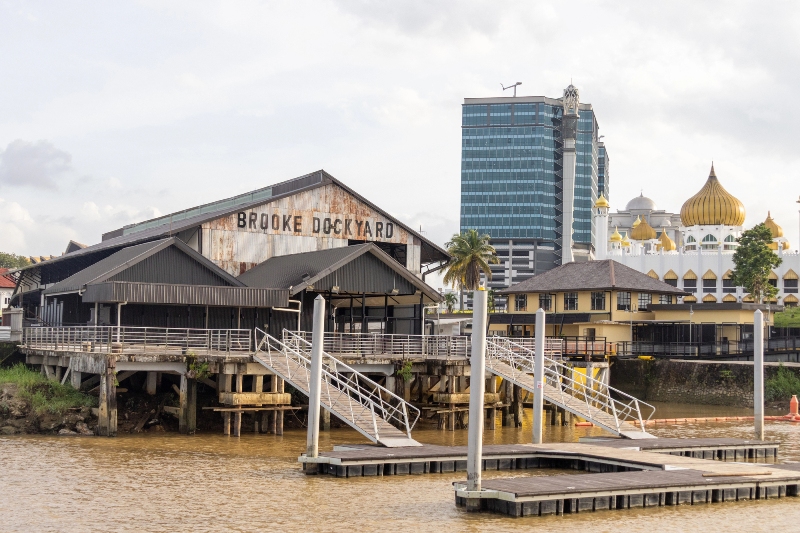
One of Kuching’s newest attractions is the Brooke Dockyard Industrial Heritage Museum, which opened in April 2026. Located along the Sarawak River, this fascinating museum gives you a chance to discover a different side of Sarawak’s history.
The dockyard was built in 1908 and opened in 1912, making it Malaysia’s oldest shipyard. Originally used to maintain vessels belonging to the White Rajahs of Sarawak, it later expanded into ship repairs, engineering and other industrial activities.
Today, the historic dockyard has been transformed into a museum, with original machinery, historical photographs and interactive displays telling the story of Sarawak’s maritime and industrial development.
One of the highlights is a full-scale replica of the HHY Zahora, a vessel once used by the Brooke rulers to travel along Sarawak’s rivers. You can explore different parts of the replica, including the wheelhouse and living quarters, to see what life aboard the vessel was like.
There are also several themed galleries covering shipbuilding, engineering and the people who worked at the dockyard. Look out for the enormous machinery, old shipbuilding equipment and historical artefacts that help bring the stories to life.
It’s an interesting place to visit if you enjoy history, particularly if you’ve already explored Fort Margherita and want to learn more about the Brooke era.
Even better, admission is currently free! Allow around an hour to explore the museum, although history enthusiasts may want longer.
Opening hours: Monday–Friday, 9am–4:45pm; weekends and public holidays, 9:30am–4:30pm. Closed on certain public holidays.
Entrance fee: Free.
Address: Brooke Dockyard Industrial Heritage Museum, Kuching Waterfront, Kuching, Sarawak.
Experience A Traditional Wooden Boat Ride At The Sarawak River

In the old days, traditional wooden boats were one of the main ways people travelled around Kuching. Today, you can still experience the Sarawak River by boat, and it’s one of the most enjoyable ways to see the city.
There are a couple of different options, depending on how much time you have and what kind of experience you’re looking for.
The simplest is to take a traditional wooden sampan, known locally as a perahu tambang or penambang, across the river. These small boats transport passengers between the waterfront and the villages on the opposite bank.
The journey only takes a few minutes, but it’s a fun and inexpensive way to experience a traditional form of transport. It’s also handy if you want to visit Kampung Boyan or Fort Margherita.
For a longer experience, I recommend taking a sightseeing cruise along the Sarawak River.
These cruises generally last around one to one and a half hours and offer fantastic views of Kuching from the water.
As you cruise along, you’ll pass some of the city’s most famous landmarks, including The Astana, Fort Margherita, the Sarawak State Legislative Assembly building and the Darul Hana Bridge. You’ll also see traditional Malay villages and quieter stretches of the river that give you a different perspective on Kuching.
If it fits with your schedule, I highly recommend doing a sunset cruise. The late afternoon light reflecting across the river is beautiful, and you’ll get to watch the city begin to light up as evening approaches.
Click here for a sunset cruise option.
You can also choose a cruise on a larger boat, with some operators offering drinks, meals or cultural entertainment as part of the experience.
It’s a relaxing way to enjoy Kuching’s scenery without having to do much walking, making it particularly good after a busy day exploring the city.
Departure point: Sightseeing cruises generally depart from the Kuching Waterfront area. Traditional sampans operate from several small jetties along the river.
Duration: A few minutes for a sampan crossing or approximately 1–1.5 hours for a sightseeing cruise.
Learn More At The Chinese History Museum

Looking to understand more about Chinese history and culture in Sarawak? The Chinese History Museum is a great place to visit. It’s located right on the Kuching Waterfront, across the river from Fort Margherita, making it easy to include while exploring the city centre.
The museum is housed in a historic building dating from 1912. Originally used as a court by the Chinese community and later by the Chinese Chamber of Commerce, it opened as a museum in 1993.
Inside, you’ll find photographs, artefacts and displays explaining the arrival of Chinese immigrants in Sarawak, their early trading activities and their contributions to the state’s development.
There are also interesting exhibits about the different Chinese communities that settled in Sarawak, including the languages and dialects they brought with them, their traditions and cultural practices.
It’s a relatively small museum, so you don’t need long to explore it, but it’s worth stopping by if you’re interested in Kuching’s multicultural history. Even better, admission is free!
Opening hours: Monday–Friday, 9am–4:45pm; weekends and most public holidays, 10am–4pm. Closed on selected public holidays.
Entrance fee: Free.
Address: Chinese History Museum, Jalan Bazar, 93100 Kuching, Sarawak.
Explore Chinatown

One of my favourite places to wander around Kuching is Chinatown, with its colourful shophouses, traditional temples, interesting shops and fantastic local food.
Chinese immigrants began settling in Kuching long before the city became the capital of Sarawak under the Brooke family, and their influence is still very much part of the city’s character today.
The two main streets to explore are Main Bazaar and Carpenter Street, both located close to Kuching Waterfront.
Main Bazaar runs alongside the river and is lined with historic shophouses, many of which now contain souvenir shops, handicraft stores and businesses selling Sarawakian products. It’s a great place to browse for gifts or simply admire the architecture.
Just behind it is Carpenter Street, one of Kuching’s oldest streets. Here, you’ll find more traditional businesses, Chinese temples, local eateries and some of the city’s best-known heritage buildings.
Don’t miss the opportunity to try local favourites such as Sarawak laksa and kolo mee, a delicious dish of dry noodles that’s particularly popular in Kuching.
Nearby India Street is also worth exploring. This pedestrian shopping street has a different atmosphere, with shops selling clothing, textiles and all kinds of everyday goods.
Chinatown is also a great area for bars and speakeasies. Picture yourself sipping an ice-cold beer on a warm evening after a day exploring the city!
It’s a wonderful place to wander around without a particular destination in mind. The pretty shophouses, temples and street art make it one of my favourite parts of Kuching to simply soak up the atmosphere.
Location: Main Bazaar and Carpenter Street, central Kuching, close to the waterfront.
Check Out The Hiang Thian Siang Ti Temple

Located on Carpenter Street in the heart of Kuching’s Chinatown, the Hiang Thian Siang Ti Temple is one of the city’s most interesting historical temples.
Dedicated to the Taoist Deity of the North, the temple has long been an important place of worship for Kuching’s Teochew community.
The original temple was established by Chinese immigrants more than 150 years ago, before a new building was constructed on Carpenter Street in 1863. Unfortunately, it was destroyed by fire in 1884 and rebuilt in 1889.
Despite its relatively small size, the temple is beautifully decorated, with colourful artwork, ornate carvings and traditional Chinese architectural features. Inside, you’ll find statues of deities, incense burners and other religious decorations.
There’s also a small turtle pond and a stage traditionally used for Chinese opera performances during religious celebrations.
The temple remains an active place of worship today, particularly during important Taoist festivals and celebrations.
It’s a lovely place to stop while wandering along Carpenter Street and offers an interesting glimpse into the traditions of Kuching’s Chinese community.
Location: 22 Jalan Carpenter, 93000 Kuching, Sarawak.
Entrance fee: Free.
Discover Local Culture At The Borneo Cultures Museum

The Borneo Cultures Museum opened in 2022 and is one of Kuching’s most impressive attractions. This enormous five-storey museum is the second-largest museum in Southeast Asia and is housed in a spectacular modern building inspired by Sarawak’s traditional crafts and cultural heritage.
But it’s not just the outside that’s worth seeing!
Inside, you’ll find five floors filled with fascinating exhibits about Sarawak’s history, indigenous communities, traditions and natural environment. Many of the displays are interactive and immersive, making this a great attraction for adults and children alike.
The ground floor is home to an auditorium, function rooms, a restaurant and a museum shop.
On the second floor, you’ll find the Love Our Rivers children’s gallery, which explores Sarawak’s rivers and the importance of protecting the environment. There’s also an Arts and Crafts Gallery highlighting traditional crafts, music and dance.
Level three features the In Harmony with Nature gallery, which explores the relationship between Borneo’s communities and their natural surroundings. The exhibits take visitors on a journey through different landscapes, showing how people have traditionally lived and interacted with the environment.
The fourth floor is home to Time Changes, which tells the story of Sarawak from prehistoric times to the present day. Here, you’ll find archaeological discoveries and exhibits explaining how life in Sarawak has changed over thousands of years.
On the top floor is Objects of Desire, a fascinating gallery showcasing traditional craftsmanship, cultural objects and the significance of these items to Sarawak’s different communities.
This is by far the best museum I’ve visited in Malaysia. Parts are incredibly immersive and interactive, and everything is presented so well. It definitely deserves a place on your Kuching itinerary.
It’s a huge museum, and you could easily spend half a day or longer exploring it. However, even if you only have a couple of hours, it’s absolutely worth visiting.
The only real downside is the admission price, which is quite expensive for international visitors compared with many other museums in Malaysia.
Opening hours: Monday–Friday, 9am–4:45pm; weekends and most public holidays, 9:30am–4:30pm. Last admission is at 4pm. Closed on selected public holidays.
Entrance fees for international visitors:
- Adults aged 18–60: RM50
- Children aged 12 and under: RM20
- Teenagers aged 13–17: RM25
- Seniors aged 61 and over: RM25
Malaysian visitors pay substantially less, with different rates for Sarawak residents and other Malaysians.
Address: Jalan Tun Abang Haji Openg, 93400 Kuching, Sarawak.
Explore The Natural History Museum

Located just across the road from the Borneo Cultures Museum, the Natural History Museum is another interesting place to visit in Kuching, particularly if you’re interested in Borneo’s wildlife.
Housed in a historic building dating from 1908, which was once known as the Second Ladies Club, this small museum has a collection of zoological exhibits showcasing the region’s fascinating animals.
Inside, you’ll find preserved specimens and skeletons of Bornean mammals, reptiles, birds, fish and more. Look out for the hornbills, wild cats and other creatures that make Borneo such an interesting destination for wildlife lovers.
There are also displays featuring rare and endangered species, giving you a chance to learn more about the incredible biodiversity of Sarawak.
It’s not a particularly large museum, so you won’t need long to explore it. However, it’s worth stopping by while you’re visiting the Borneo Cultures Museum, especially if you’re travelling with kids.
Best of all, admission is free!
Opening hours: Monday–Friday, 9am–4:45pm; weekends and most public holidays, 10am–4pm. Closed on selected public holidays.
Entrance fee: Free.
Address: Jalan Tun Abang Haji Openg, Taman Budaya, 93400 Kuching, Sarawak.
Visit The Sarawak Islamic Museum

Also located near the Borneo Cultures Museum is the Sarawak Islamic Museum, officially known as the Islamic Heritage Museum.
Housed in an attractive historic building that was once used as a college for training Malay teachers, the museum opened in 1992 and explores the history and cultural influence of Islam in Sarawak and beyond.
Inside, you’ll find seven galleries covering different aspects of Islamic civilisation, including history, architecture, science, literature, music, traditional costumes and decorative arts.
There are also exhibits featuring historical weapons, everyday objects and a collection of Qurans.
It’s an interesting place to learn more about Islamic history and the contributions of Muslim communities to art, education, science and culture.
The museum is relatively small compared with the nearby Borneo Cultures Museum, but it’s worth visiting if you’re interested in history or religious heritage.
Admission is free, making it another easy addition to a walking tour of Kuching’s museums.
Opening hours: Monday–Friday, 9am–4:45pm; weekends and most public holidays, 10am–4pm. Closed on selected public holidays.
Entrance fee: Free.
Address: Jalan P. Ramlee, 93400 Kuching, Sarawak.
Leave The Big Smoke Behind At Kampung Boyan

Just across the Sarawak River from Kuching Waterfront is Kampung Boyan, a traditional Malay village with colourful houses, local eateries and fantastic views back towards the city.
Despite being only a short distance from the busy waterfront, it feels quite different here. The streets are quieter, the buildings are generally low-rise and you can get a glimpse of everyday life in one of Kuching’s riverside communities.
One of the best reasons to visit is the journey itself!
You can take a traditional wooden boat, known locally as a penambang, across the Sarawak River. The crossing only takes a few minutes and is a fun way to experience a form of transport that locals have used for generations.
The fare has traditionally been around RM1 per person each way, making it one of the cheapest experiences in Kuching.
Once you’re across the river, you can wander around the village, stop for something to eat at one of the local eateries or simply enjoy the views of the Kuching skyline.
Kampung Boyan is also close to Fort Margherita, so it’s easy to combine both attractions in one outing.
Location: Kampung Boyan, Petra Jaya, across the Sarawak River from central Kuching.
Getting there: Take a traditional penambang from one of the waterfront jetties, including the crossing near the White Barouk.
Look For Cat Statues

Kuching is famous as Malaysia’s Cat City, so it makes sense that you’ll find cat statues scattered all over the city!
One of the most famous is the Cat Family statue, a group of colourful cats at a roundabout near Jalan Tunku Abdul Rahman. It’s one of Kuching’s most recognisable landmarks and a popular place to stop for a photo.
The statues look particularly fun in the evening when they’re illuminated.
Another famous landmark is the large white waving cat near the junction of Jalan Padungan and Jalan Tunku Abdul Rahman. Installed in the 1990s, it was Kuching’s first major cat monument and has become another symbol of the city.
But these aren’t the only cats you’ll find!
There are cat sculptures, paintings and other feline decorations scattered throughout central Kuching. Some are easy to spot, while others are tucked away in unexpected places, including on walls and street furniture.
You’ll even find bronze cat sculptures near the waterfront.
It’s quite the game trying to spot these pesky cats as you explore the city. Keep your eyes open and see how many you can find by the end of your trip!
This is also a particularly fun activity if you’re visiting Kuching with kids, and it doesn’t cost anything.
Location: Various places around central Kuching, particularly Jalan Tunku Abdul Rahman, Jalan Padungan and the waterfront.
Entrance fee: Free.
Have A Laugh At The Cat Museum

Kuching is known as Malaysia’s Cat City, so it’s only fitting that it has a museum dedicated entirely to cats!
The Cat Museum is the world’s first museum of its kind and is located inside the Kuching North City Hall building, around 15 minutes’ drive from the waterfront.
Inside, you’ll find more than 4,000 cat-related exhibits spread across four galleries. There are paintings, sculptures, photographs, historical artefacts and all kinds of memorabilia celebrating our feline friends.
Some exhibits explore the history of cats and their significance in different cultures, while others are much more lighthearted. You’ll find everything from Japanese Maneki-Neko lucky cats to Garfield, Hello Kitty and all sorts of unusual cat-themed objects.
While it’s called a museum, I found it more of a kitschy collection of cat-related memorabilia. It’s like someone started collecting cat items and things got completely out of hand!
However, that isn’t to say it isn’t worth visiting. It’s actually one of my favourite things to do in Kuching because it’s just so funny.
In fact, I consider it a must-do in Kuching. You only need about half an hour to have a good look around, although serious cat lovers might want longer.
It’s also a fun place to visit with kids, particularly if you’ve already been hunting for cat statues around the city.
Opening hours: Daily, 9am–4:30pm, except public holidays.
Entrance fee: RM10 for international adults and RM5 for international children aged 7–12.
Address: Bangunan DBKU, Jalan Semariang, Petra Jaya, 93050 Kuching, Sarawak.
See Orangutans Up Close At Semenggoh Nature Reserve

Seeing orangutans is one of the most incredible experiences you can have in Borneo, and Semenggoh Nature Reserve is one of the easiest places to see these amazing animals near Kuching.
Located around 24 kilometres from the city, Semenggoh is home to a population of semi-wild orangutans that roam freely through the surrounding rainforest.
The Semenggoh Wildlife Centre was established in 1975 to rehabilitate orangutans and other animals that had been injured, orphaned or kept illegally as pets. Over the years, the programme successfully reintroduced orangutans to the forest.
Today, the reserve provides a protected habitat for these orangutans and their descendants, while rehabilitation activities for newly rescued animals have largely moved to Matang Wildlife Centre.
One of the highlights of visiting Semenggoh is watching the orangutans during their supplementary feeding sessions.
These generally take place at 9am and 3pm, when food is provided at designated feeding platforms. The orangutans are free to come and go, so you may see them swinging through the trees, climbing down to collect food or simply relaxing in the surrounding forest.
However, sightings are never guaranteed. During the fruiting season, when there’s plenty of natural food available in the forest, the orangutans may not visit the feeding platforms at all.
When I visited during the fruiting season, I was lucky enough to see two orangutans that hung around for a while. It was amazing watching them move through the trees, and they seemed quite happy to pose for us!
It’s important to remember that these are wild animals, so follow the rangers’ instructions, keep your distance and never attempt to touch or feed them.
There’s also information about orangutan conservation at the centre, making this an interesting and educational experience as well as a fantastic opportunity to see wildlife.
Semenggoh is an easy half-day trip from Kuching. You can drive or take a Grab, although arranging a return journey in advance is sensible. Alternatively, joining a guided tour is a convenient option if you don’t have your own transport. This is what I did and it was cheap and easy.
Click here for discounted tour tickets or click here here to read my full guide to visiting.
Try to arrive before the feeding session begins so you have time to enter the reserve and reach the viewing area.
Opening hours: Daily, 8am–10am and 2pm–4pm.
Feeding times: Approximately 9am and 3pm.
Entrance fee: RM10 for international adults and RM5 for international children aged 6–17. Malaysian adults pay RM5.
Address: KM 20, Jalan Puncak Borneo, 93250 Siburan, Sarawak.
Learn Local Culture At Sarawak Cultural Village

Looking for one of the best places to visit in Kuching to learn about Sarawak’s different cultures? Head to the Sarawak Cultural Village, a fascinating living museum where you can experience the traditions of the state’s diverse communities in one place.
Located at the foot of Mount Santubong near Damai Beach, around 45 minutes’ drive from Kuching, the village is set in beautiful surroundings with traditional houses arranged around a lake.
As you explore, you’ll find full-scale replicas of homes belonging to Sarawak’s major ethnic communities, including the Bidayuh, Iban, Orang Ulu, Melanau, Penan, Malay and Chinese.
Each house offers something different. You can explore traditional longhouses, see how families lived and learn about the customs, crafts and everyday activities of the communities they represent.
There are also demonstrations of traditional skills such as weaving, beadwork, cooking and music. It’s particularly interesting to see how different the houses are, from the communal longhouses of the Iban and Orang Ulu to the towering Melanau house.
One of the highlights is the multicultural dance performance, held twice daily. This entertaining show features traditional music, colourful costumes and dances from Sarawak’s different communities.

Make sure you time your visit to catch one of these performances, as it’s one of the best parts of the experience.
My kids particularly loved the opportunity to get up on stage and join in during the dance performance!
After exploring the village, you can stop at the onsite restaurant to try some local food. There are also souvenir shops selling handicrafts and other Sarawakian products.
You could easily spend half a day here, especially if you take your time exploring the different houses and watching the demonstrations.
Sarawak Cultural Village is one of the most interesting day trips from Kuching and is particularly good for families. You can also combine your visit with some time at nearby Damai Beach.
Click here for half-day tour tickets.
Opening hours: Daily, 9am–5pm. Last entry at 4pm.
Cultural performances: 11:30am and 4pm.
Entrance fees for international visitors:
- Adults: RM155 walk-in or RM135 online.
- Children: RM95 walk-in or RM85 online.
- Tickets including lunch are also available.
Address: Pantai Damai, Santubong, 93752 Kuching, Sarawak.
Splash, Relax Or Hike At Damai Beach

Looking for a great beach near Kuching or somewhere to go on a jungle hike while enjoying some time by the sea? Or perhaps you’re visiting Sarawak Cultural Village and wondering what else there is to do in the area? Head to Damai Beach!
Located around 40–45 minutes’ drive north of Kuching, Damai Beach is one of the easiest places to visit for some beach time. It’s set on the Santubong Peninsula, with the impressive Mount Santubong rising behind it.
The beach itself is lovely, especially at sunset, when the changing light makes the scenery particularly beautiful.
It’s also a great place to spend a little longer, with several resorts in the area, including Damai Beach Resort and Permai Rainforest Resort.
If you’re feeling more adventurous, the surrounding Santubong area offers jungle trekking, with trails ranging from relatively easy walks to the challenging climb up Mount Santubong. The mountain hike is a serious undertaking, so make sure you check current trail conditions and permit requirements before attempting it.
Sarawak Cultural Village is also located nearby, making it easy to combine both attractions into a full day trip from Kuching.
The easiest way to reach Damai Beach is by car or taxi/Grab. Shuttle services have also operated between central Kuching and the Damai area, including departures near the Grand Margherita Hotel.
You can also take a Grab from Kuching, although finding one for the return journey can be difficult. I’d recommend arranging your return transport in advance rather than leaving it until you’re ready to go.
Click here to read our full guide to Damai Beach and everything there is to do there.
Location: Damai Beach, Santubong Peninsula, approximately 35 kilometres north of Kuching.
Take A Santubong Wildlife Cruise

For something quite different, head out on a wildlife cruise around the Santubong Peninsula. This is one of my favourite experiences near Kuching and a fantastic opportunity to see some of Borneo’s incredible wildlife in its natural environment.
These cruises explore the Santubong and Salak rivers, along with the mangroves and waterways around Kuching Wetlands National Park.
As you cruise along, your guide will look out for Irrawaddy dolphins, proboscis monkeys, silver-leaf monkeys, crocodiles, long-tailed macaques, monitor lizards and a variety of birds.
The Irrawaddy dolphins are a particular highlight. These unusual dolphins live in coastal waters, rivers and estuaries, and the waters around the mouth of the Santubong River are one of the places where they can sometimes be spotted.
Late-afternoon cruises are particularly good because you get to experience the changing scenery as the sun begins to set. As darkness falls, your guide may also search for crocodiles along the riverbanks and fireflies illuminating the mangroves.
When I did this cruise, it was simply amazing. Not just the animal spotting, but how beautiful the whole area is as the sun sets.
I watched Irrawaddy dolphins glide by for about 30 minutes, saw proboscis monkeys playing in a tree, spotted macaques and enjoyed some incredible scenery. The fireflies at night were another highlight.
It’s definitely a tour worth doing!
Of course, these are wild animals, so sightings aren’t guaranteed. Weather and river conditions can also affect departures, particularly during the wetter months.
Most afternoon wildlife cruises take around four to five hours, including transfers from Kuching, although the exact duration depends on the operator. Some tours include hotel pick-up, dinner or refreshments.
I recommend choosing an afternoon cruise that continues into the evening so you have the chance to see both the wildlife and the fireflies.
Click here to join this wildlife cruise now or click here to read my full review of this cruise.
Departure point: Usually the Santubong Boat Club area, with transfers from Kuching available on many tours.
Duration: Approximately 4–5 hours including transfers, depending on the tour.
Tip: Bring insect repellent, a camera and a light rain jacket. Binoculars can also be useful for spotting wildlife.
Spot Wildlife At Bako National Park

Established in 1957, Bako National Park is Sarawak’s oldest national park and one of the best places to visit near Kuching if you love wildlife and nature.
Located on the Muara Tebas Peninsula, the park is famous for its unusual rock formations, beautiful beaches, rainforest trails and incredible variety of wildlife.
Getting there is part of the adventure! First, you’ll need to travel around 35–45 minutes from Kuching to Kampung Bako, where boats depart for the national park. The boat journey usually takes around 15–30 minutes, depending on conditions.
One of Bako’s most famous attractions is its sea stacks. These unusual rock formations have been shaped by centuries of erosion, creating some spectacular coastal scenery.
You can admire the coastline from the park’s beaches, but a boat trip is the best way to get a closer look at the sea stacks and surrounding cliffs. Ask your boat operator about the possibility of including a sightseeing detour.
Bako is particularly famous for its seven different ecosystems, including rainforest, mangroves, swamps, dipterocarp forests and coastal cliff vegetation.
All these different environments support an incredible variety of wildlife.
The star of the show is usually the proboscis monkey, which is native to Borneo and famous for its enormous nose. However, there’s much more to see, including bearded pigs, long-tailed macaques, monitor lizards, silvered langurs and occasionally flying lemurs.
There are numerous hiking trails through the park, ranging from relatively short walks to much more demanding treks.

Some trails lead through the rainforest, while others take you to secluded beaches, viewpoints and interesting rock formations. Check which trails are open when you arrive, as closures and conditions can change.
Be prepared for some challenging walking, even on shorter trails. Many involve climbing over tree roots, navigating uneven ground and dealing with the heat and humidity.
However, I managed to explore Bako with a bad ankle, so don’t automatically rule it out if you’re not an experienced hiker! Just choose a trail that suits your fitness and mobility.
For the best chance of spotting wildlife, spend some time around the park headquarters as well as exploring the trails. Animals are sometimes seen surprisingly close to the accommodation and visitor facilities.
If you have more time, you can even stay overnight in the park’s basic accommodation. This gives you more opportunities to explore and potentially join a guided night walk.
You can visit Bako independently, but a guided tour makes the logistics much easier. You won’t have to organise the boat transfer yourself, and an experienced guide can help you spot wildlife that you might otherwise miss.
Click here for discounted full-day tour tickets. Tours are the best way to see wildlife.
Click here for our full guide to visiting Bako National Park. It has absolutely everything you need to know about visiting here from how to get here to what trails you can hike.
Entrance fee: RM20 for international adults and RM7 for international children aged 7–18. Malaysians pay lower rates.
Boat transfer: Approximately RM200 return per boat for up to five people, although prices and arrangements can change. Sharing a boat with other visitors can reduce the cost.
Getting there: Travel to Bako Terminal at Kampung Bako, then take a boat to the national park.
Important: Boat departures depend on tides, sea conditions and weather. Arrange your return boat time when you arrive and follow the park staff’s advice.
Experience The Annah Rais Longhouse

Longhouses are an important part of Sarawak’s indigenous heritage. Traditionally built from timber and bamboo, these long communal buildings accommodate multiple families, with individual living spaces connected by shared walkways.
Many traditional longhouses are located in remote parts of Sarawak, but you can visit one on a day trip from Kuching.
Annah Rais Longhouse is a traditional Bidayuh settlement in the Padawan highlands, around 60 kilometres from Kuching. The drive generally takes around 1–1.5 hours, depending on traffic and road conditions.
Unlike the replica houses at Sarawak Cultural Village, Annah Rais is a real community where families continue to live today.
One of the most interesting features is the long communal bamboo walkway, known as the awah, which connects the homes. As you explore, you’ll see traditional wooden buildings alongside more modern additions, reflecting how the community has changed over time.
The village also has a traditional headhouse, or baruk, where you can learn about aspects of Bidayuh history and customs.
One of the more unusual historical features is a collection of human skulls associated with the community’s headhunting past. These are a reminder of traditions and conflicts from a very different period of Sarawak’s history.
There are also opportunities to learn about traditional crafts, see local products and discover more about the Bidayuh way of life.
You may come across tuak, a traditional rice wine that plays a role in some celebrations and cultural ceremonies.
Although Annah Rais welcomes tourists, remember that this is still someone’s home. Be respectful of residents, ask permission before photographing people and don’t enter private areas without an invitation.
There are also hot springs a short distance from the village, which you could combine with your visit if you have time.
Annah Rais is an interesting place to visit if you want to experience a traditional Sarawakian community rather than simply see exhibits in a museum.
The easiest way to get here is by car, private driver or organised tour, as public transport is limited.
Opening hours: Open daily, although arranging your visit in advance is recommended.
Entrance fee: The local council lists RM10 for adults and RM5 for children. Confirm current rates before travelling.
Address: Kampung Annah Rais, Jalan Borneo Heights, Padawan, Sarawak.
Explore Fairy Cave And Wind Cave Nature Reserves
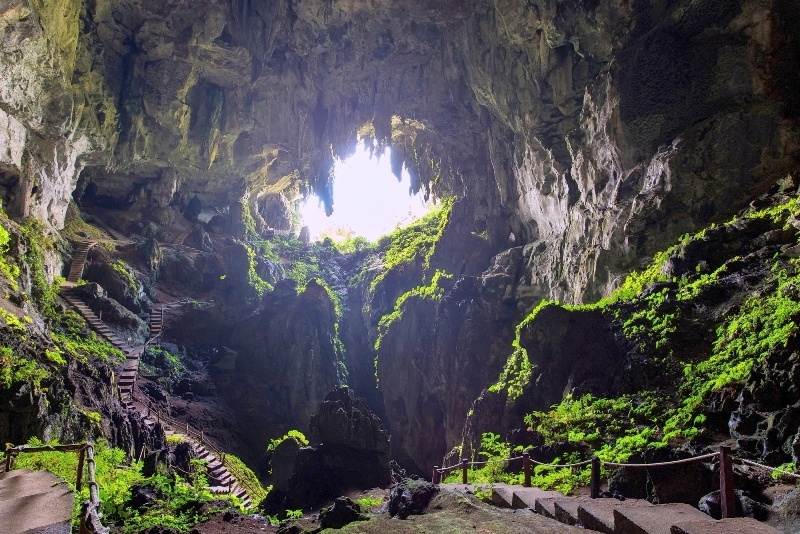
Looking for somewhere spectacular to visit outside Kuching? Head to Fairy Cave and Wind Cave Nature Reserves, two fascinating limestone caves near the town of Bau, around an hour’s drive from Kuching.
These caves offer something quite different from Kuching’s rainforests and wildlife attractions, with enormous limestone formations, unusual rock features and thousands of bats and swiftlets. Even better, they’re only around eight kilometres apart, making it easy to visit both on the same trip.
I recommend starting at Fairy Cave, which is particularly impressive thanks to its enormous chambers and dramatic natural lighting.
To enter, you’ll need to climb a series of stairs leading up into the limestone cliff. Once inside, you’ll find a spectacular cavern filled with stalactites, stalagmites and moss-covered rocks. Sunlight streams through openings in the cave, illuminating the greenery and creating an almost magical atmosphere.
There are walkways and viewing platforms to help you explore, including routes known as the Twilight Trail and Dark Trail. Take your time to admire the formations and enjoy the views. The combination of towering rock walls and natural light makes this an incredible place for photography.
Afterwards, head to Wind Cave Nature Reserve, which offers a completely different experience.
Unlike the enormous, partly sunlit chambers of Fairy Cave, Wind Cave has darker passages running through a limestone outcrop beside the Sarawak River.
A network of wooden walkways takes you through the cave, where you can admire stalactites, stalagmites and unusual limestone formations. Keep an eye out for the thousands of bats and swiftlets that live here. You may hear them before you see them!
Wind Cave gets its name from the cool breeze that flows through its passages. However, much of the cave is unlit, so bring a torch or headlamp rather than relying on your phone.
There’s also a picnic area near the river, making it a pleasant place to relax after exploring.
Allow around three to four hours to visit both caves, excluding the drive from Kuching. Wear comfortable shoes with good grip, as the steps and walkways can be slippery, particularly after rain.
The easiest way to visit is either via this half day tour here or with your own car. You can hire one here.
Location: Bau, Sarawak, approximately 50 kilometres from Kuching. Fairy Cave and Wind Cave are around eight kilometres apart.
See The Famous Rafflesia Flower At Gunung Gading National Park

Want to see one of the world’s largest flowers? Gunung Gading National Park is one of the best places to visit near Kuching for the chance to see the incredible Rafflesia in bloom.
Located near Lundu, around 1.5–2 hours’ drive from Kuching, this national park was established to protect the rare Rafflesia flower and its natural rainforest habitat.
The Rafflesia tuan-mudae found here can grow up to a metre across, making it one of the largest flowers in the world. It’s also famous for its unpleasant smell, which attracts flies that help pollinate it.
However, seeing one in bloom requires a little luck!
Rafflesia flowers only bloom for around five to seven days, and there’s no fixed flowering season. This means you could visit the park and not see any flowers at all.
To avoid disappointment, I highly recommend contacting the park office before making the journey from Kuching. The rangers can tell you whether any flowers are currently blooming or expected to open soon.
When flowers are in bloom, park staff can advise you on where to find them. Some are relatively close to the main trails, while others may require a longer walk through the rainforest.
But even if there aren’t any Rafflesia flowers to see, Gunung Gading is still a beautiful place to visit.
There are several jungle trails through the rainforest, including a popular waterfall trail that takes you past a series of waterfalls and natural pools.
The main waterfall stops are Waterfalls 1, 3 and 7, with some sections of the trail being more challenging than others. It’s a lovely place to enjoy the rainforest, and swimming may be possible in designated areas when conditions are safe.
For experienced hikers, there are also more demanding trails, including the challenging climb towards the summit of Mount Gading.
Make sure you wear sturdy walking shoes and bring plenty of water and insect repellent. The rainforest can be hot and humid, and trails may be slippery after rain.
The easiest way to visit is on a guided tour. Click here to book one now.
If seeing a Rafflesia is your main reason for visiting, I’d only make the journey once you’ve checked with the park that there’s a good chance of seeing one.
Opening hours: Daily, 8am–5pm, including public holidays.
Entrance fee: National park admission charges apply.
Park contact: +60 82-735 144 (call to check Rafflesia flowering).
Address: Gunung Gading National Park, 94500 Lundu, Sarawak.
Eat Kek Lapis

One of the most delicious things to do in Kuching is try Sarawak’s famous kek lapis!
This colourful layered cake is one of the state’s best-known specialities, and you’ll find it sold in shops and stalls throughout Kuching.
What makes kek lapis particularly interesting is its appearance. Each cake is made with multiple thin layers, often arranged into elaborate geometric patterns using different colours and flavours.
Some cakes feature simple horizontal layers, while others have incredibly intricate designs that almost look too good to eat!
We couldn’t help but try some after admiring how good they looked.
Thankfully, they taste just as good as they look!
You’ll find everything from traditional butter cakes to flavours such as chocolate, pandan, cheese and even durian.
One of the easiest places to try kek lapis is along Main Bazaar, close to Kuching Waterfront.
I recommend stopping at Kek Lapis Mama Su, which has a huge selection of colourful cakes. You can often sample different flavours before choosing your favourites, and smaller portions are available if you want to try several varieties.
Another popular option is Mira Cake House in Kampung Boyan, across the Sarawak River. You could combine a visit with a traditional wooden boat crossing and a wander around the village.
Kek lapis also makes a great souvenir to take home, although you’ll probably want to buy extra because it’s hard to stop at just one piece!
It’s the perfect way to top off a great day exploring Kuching.
Where to try it:
- Kek Lapis Mama Su: 58 Jalan Main Bazaar, Kuching.
- Mira Cake House: 44A Jalan Brooke, Kampung Boyan, Kuching.
Kuching Attractions Map

Best Place To Stay In Kuching
There are many accommodation options both in and out of Kuching.
We have handpicked four properties at different price points and locations from a luxury resort by the coast to a convenient inn located in the city. This way, we have provided our best recommendations for all types of travellers.
You can find our full guide to the best hotels in Kuching here. If you are looking for a Kuching Airport hotel, read our review of the Raia Hotel here. It’s directly opposite the airport.
BEST RESORT – Cove 55 Hotel Kuching Review

Cove 55 is a luxurious boutique resort located at the foot of Mount Santubong, around 35–40 minutes’ drive from central Kuching. Surrounded by nature, with views towards the South China Sea, it’s a fantastic choice if you want somewhere peaceful and relaxing to stay.
Originally built as a holiday home for an Iban family, the resort combines contemporary luxury with design elements inspired by Sarawak’s indigenous heritage.
Accommodation includes stylish rooms and suites in the main building, as well as private villas. Rooms feature either a private courtyard or balcony, while some of the more luxurious villas have their own swimming pools overlooking the sea.
There are also larger villas suitable for families, including two-bedroom options.
One of the highlights is the spectacular 30-metre infinity pool, which overlooks the South China Sea. There’s also a fitness centre, a poolside bar and an onsite restaurant serving dishes inspired by Sarawakian cuisine.
The resort can also help arrange activities and excursions around Kuching, including wildlife experiences and cultural attractions.
Cove 55 is best suited to travellers looking for a relaxing, luxurious retreat rather than a hotel within walking distance of Kuching’s main attractions. You’ll need transport to explore the city, but the peaceful surroundings make it a wonderful place to unwind.
Click here for the latest prices.
BEST IN KUCHING – The Waterfront Hotel Kuching Sarawak Review

The Waterfront Hotel is one of my favourite places to stay in Kuching, particularly because of its fantastic location.
This five-star hotel sits directly above Plaza Merdeka Shopping Centre, just a short walk from Kuching Waterfront, Carpenter Street and the Borneo Cultures Museum. It’s hard to find a more convenient base for exploring the city on foot.
There are several room categories to choose from, including twin and double rooms, family rooms and suites with separate living areas.
I highly recommend booking a room with a river view if your budget allows. Looking out over the Sarawak River and the impressive State Legislative Assembly building is one of the highlights of staying here.
Rooms are modern and comfortable, with air-conditioning, WiFi, tea and coffee-making facilities and other conveniences.
The hotel also has a restaurant with fantastic river views, a swimming pool, a poolside bar and a gym. Having the shopping centre downstairs is another bonus, particularly when you want somewhere convenient to eat or shop.
One thing to be aware of is that the hotel is currently undergoing room enhancement works, with completion expected in the second quarter of 2027. The hotel remains open, including its pool and other facilities, but some renovation activity may be noticeable during your stay.
Despite this, I still think The Waterfront Hotel is an excellent choice if you want to stay right in the heart of Kuching.
I love staying here and highly recommend it.
Click here for the latest prices or click here to read our full review.
Pullman Kuching Hotel Review

The Pullman Kuching Hotel is a beautiful property located right above a shopping mall and only a five-minute walk from Kuching Waterfront.
Reasonably priced for a 4.5 star hotel, this international branded hotel offers everything you would expect including a well-appointed fitness centre, spa and swimming pool. Guests can enjoy a range of Asian and international dishes at Culina, Chinese cuisine at Nu Er Hong and drinks at The Junction lounge.
All rooms are spacious and well equipped with everything you need, even fitness gear!
While superior rooms offer vibrant city views, deluxe rooms come with a spectacular waterfront view that’s worth the additional cost. For families, a family room comes equipped with one king bed and one single bed. There are also suites with separate living areas.
Click here for the latest prices.
BUDGET – Tune Hotel Waterfront Kuching Review

Strategically located, Tune Hotel is just a stone’s throw away from the waterfront and is close to major attractions such as the Chinese History Museum and Borneo Cultures Museum. Even though there is no on-site restaurant, you will find some great local Kuching cafes and eateries in the near vicinity.
The rooms are small, but they do have air-conditioning, tea and coffee making facilities and private bathrooms with some toiletries. You can choose between single, twin, double and family rooms which have a bunk bed and bedding for three.
Some rooms do not have windows which can help you save money.
There is a lack of facilities, and rooms are not cleaned during your stay. Otherwise, this is a great option for people looking for a budget hotel in Kuching.
Click here for the latest prices.
How To Get To Kuching

It’s easy to get to Kuching by flight, bus or car (if you are already in Malaysian Borneo).
If you are coming from peninsular Malaysia, your only choice is to fly here. There are direct flights from Kuala Lumpur, Penang, Johor Bahru and Kota Bharu, as well as international connections including Singapore.
Kuching International Airport is around 10 kilometres from the city centre. The easiest way to reach your accommodation is by Grab or taxi, with the journey generally taking around 20–30 minutes depending on traffic.
To see all the latest flights and prices, click here.
If you need to take a bus from elsewhere in Sarawak, click here for the latest timetables and bus prices.
You can also hire a car to get you there by clicking here.
You can also read our guide to getting to Kuching from Kota Kinabalu (in Sabah) here or our guide to getting to Kuching from Sibu here.
Kuching With Kids

There are so many places in Kuching that are excellent to visit with kids. Within the city, hunting for cat statues and visiting the Cat Museum are both sure to get your youngsters excited.
Children also love the experience of taking boats across the river to different places of interest in Kuching city. Be sure to include the various museums, especially the Natural History Museum for its animal exhibits.
Outside of the city, Kuching is surrounded by natural jungle and the nature that Borneo is famous for. Young and old can have fun exploring the region’s national parks, spotting wildlife and, if you’re lucky enough to visit when one is flowering, seeing the jaw-dropping Rafflesia.
And then there’s the chance to see orangutans at Semenggoh Nature Reserve and all the fun at Sarawak Cultural Village, where you can explore traditional houses, learn about local cultures and watch cultural performances. My kids loved the opportunity to get up on stage at the cultural village during the dance performance.
You will not regret bringing your children for a holiday in Kuching.
Final Words

Kuching has the perfect combination of modern attractions and rich cultural heritage. This is a city where you can happily wander around the streets, taking in the artistic surroundings and admiring the diverse mix of cultures.
Being the capital of Sarawak, it’s a busy city but just drive for half an hour and you’re in a primeval jungle, full of natural wonders. Truly an amazing city, it makes for a perfect starting point to your Borneo journey.
You can check out all the best Kuching day trips here. Find our full travel guide to Kuching here and our full guide to the best places to stay in Kuching here.
Planning a trip to Malaysia? Have any questions? Join our Malaysia Travel Planning Facebook group here now! It’s the perfect place to ask any questions and to be inspired!


